Removes hard-to-treat organic pollutants from mg/L to trace levels
High efficiency with no secondary waste stream
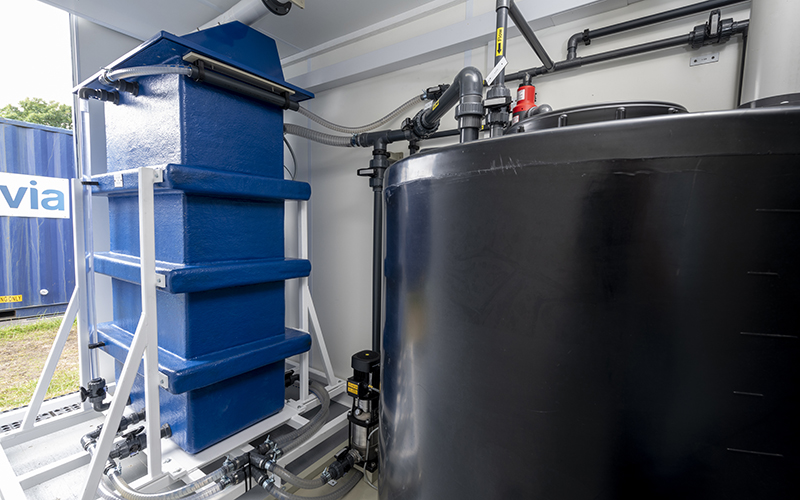
The Nyex Rosalox™ water treatment system provides targeted removal of organic pollutants from mg/L to ppb ranges using a combination of adsorption and oxidation.
Nyex Rosalox™ is our unique treatment system which takes two Best Available Technique (BAT) technologies – adsorption and oxidation and combines them in a single step process. By combining the technologies, our process overcomes many of the drawbacks of using each of these technologies in their own right.
No chemical dosing is required, and no toxic sludge is produced
Lower operational costs - Careful selection of materials results in low OpEx
Targets the localised pollutant - Can preferentially treat certain organic compounds
Ongoing water treatment without interruption - No chemical dosing and no sludge to deal with
High removal rates and efficiency - Ask us for a treatability trial to check your water
Two technologies in one unit work together for higher efficiencies
In the Nyex Rosalox™ water treatment process, organic pollutants are adsorbed onto our patented conductive media, concentrating them in one place. Then we use electrochemistry to oxidise the contaminant. The applied current also regenerates the surface of media to enable ongoing water treatment without interruption.
Adsorption Technologies
Often have good removal rates initially, then reduce in effectiveness as the adsorbent becomes saturated. The adsorbent must then be replaced which adds to the consumable costs and increases the maintenance burden. The spent adsorbent is usually sent off-site for regeneration or must be disposed of in landfill or by incineration. Therefore, the main drawback of adsorption technologies is high operational costs – particularly consumables, operator time, logistics, and disposal costs.
Electrochemical oxidation technologies
Use an electric current to generate ●OH hydroxyl radicals which oxidise the contaminants. These technologies typically provide good removal rates however are limited by high electricity consumption and reduced efficiency when removing trace contaminants.
+
=
Jerome Budin
Wastewater consultant
Schedule a call with one of our wastewater treatment consultants at your convenience. Or you can send us an enquiry.
The Nyex Rosalox™ water treatment plant is best suited to an industrial manufacturing facility for the removal of residual organic chemicals. The water technology is often used to meet strict trade effluent targets.
The reduced footprint means Rosalox fits neatly alongside your production line.
Applications of Nyex Rosalox™ include:
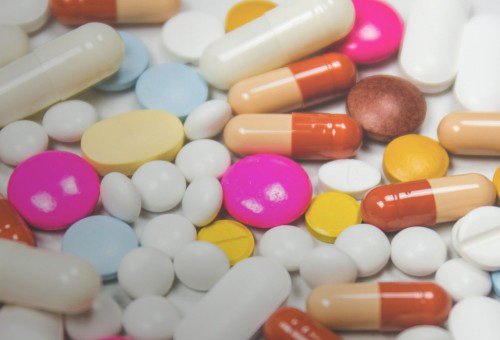
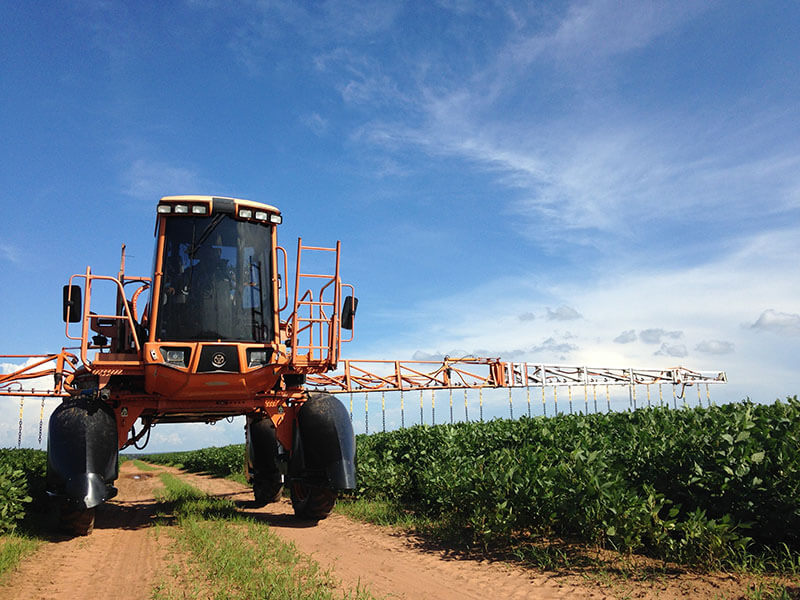
APIs, pesticides and herbicides
Rosalox™ is very well suited to treating APIs, pesticides, insecticides and herbicides. It is well used in the pharma and agrochemical industry for this reason.
COD removal to low levels
Rosalox™ water treatment process is designed to remove chemical oxygen demand (COD) levels <300mg/L to very low levels for both high and low flow rates.
Adsorbing pollutants
Rosalox™ is best suited to pollutants which adsorb well. If you have a non-adsorbing organic pollutant then you would be better suited to our Nyex Ellenox™ water treatment process.
Organic contaminants
The process is designed to solely treat organic contaminants. This means that inorganic chemicals, metals and other contaminants will require an additional treatment step alongside Rosalox™ or Ellenox™ for a complete treatment solution.
Suspended solid filtration required
Unlike Ellenox™, Rosalox™ processes require a filtration step upfront to reduce suspended solids.
Final polishing step
They are designed as a specialist tertiary step to enable final ‘polishing’ of harmful organics prior to discharge to the sewer or environment.
ZLD and water reuse
Rosalox™ wastewater treatment process can be used to treat water for recycling and reuse around the manufacturing facility.
Free industrial wastewater consultation
Tell us what organic compounds you need to remove from your water and our consultants will give their recommended approach which might involve:
Engineering assessment of your water profile
Treatability trial to scope the pilot
Optioneering to determine best solution
Enter your details...
Nyex Rosalox Benefits
✓ No chemical dosing
Avoid handling costs of chemicals, including H&S training for maintenance team, time spent completing COSHH and risk assessment paperwork and negative environmental impacts.
✓ No waste
Rosalox™ combines adsorption and oxidation into one system, resulting in targeted and complete destruction of contaminants without the production of secondary wastes.
✓ Onsite treatment
Avoid the high recurring costs and negative environmental impact of having sludge or media transported and disposed of by third party specialists.
✓ High up-time
No need to stop the process to clean or replace fouled membranes. Our Nyex™ media is simultaneously regenerated during the treatment process. Just requires a minimal top up annually.
✓ Low operational maintenance
Very safe operation with no chemicals and no moving parts. Minimal health and safety training on Nyex™ for the maintenance team.
✓ Safe water reuse and ZLD
Treated water can be reused as process water and contributes to a ZLD strategy. The lack of chemical dosing is key as water treated with chemicals often becomes unsuitable for reuse.
✓ Modular flexible design
Our systems are modular in nature and can be turned on and off according to demand, therefore Nyex™ water treatment systems offer flexibility to meet variable loading over time and accommodate future expansion.
✓ Complementary technology
Integrates well with other technology to make other water treatment processes more efficient. For example, reducing damage to RO membranes or to biological treatments.
Nyex Rosalox™ takes its name from Dr Rosalind Franklin, the English chemist who studied the molecular structure of DNA, RNA, viruses, coal and graphite. We chose Rosalind because she was a chemist, like many of us at Arvia. We find her intelligence and dedication inspirational and are proud to call one of our products after her.
Rosalind lived in London and in 1941 graduated from Cambridge University with a natural sciences degree. She got her PhD in 1945 following her work on coal. She went to Paris and became an X-ray crystallographer looking at the molecular structure of crystals. It was this work which led to the subsequent discovery of the double helix structure of DNA. She died aged 37 of ovarian cancer.
This site is registered on wpml.org as a development site. Switch to a production site key to remove this banner.