Within the lithium battery manufacturing industry, there has been a major push towards the recycling and reuse of lithium batteries. This is due to the growing demand for lithium batteries in numerous applications including Electrical vehicles, consumer electronics and industrial appliances.
Industry
Battery Recycling
Equipment Capacity/Flow Rate
1.63m3/hr
Compounds of Concern
TOC
Influent Concentration
10,000 mg/L
Treatment Targets
1000 mg/L
Unit Energy Consumption
162 kWh/kg
Industry
Battery Recycling
Equipment Capacity/Flow Rate
1.63m3/hr
Compounds of Concern
TOC
Influent Concentration
10,000 mg/L
Treatment Targets
1000 mg/L
Unit Energy Consumption
162 kWh/kg
Objective: Lithium battery recycled water treatment
A client approached Arvia to assist with cleaning the water used in a battery recycling plant. The aim was to reduce the Total Organic Carbon (TOC ) level in the water by 90% to allow the water to be reused. The client had previously considered the use of Fentons, a water treatment process which uses chemical dosing to create the necessary hydroxyl radical. However, this method produces Hydrogen Fluoride gas which is extremely corrosive gas. If this gas is breathed in at high levels it can cause an immediate damaging effect on health. Exposure requires immediate medical attention and can cause blindness as it rapidly destroys the corneas.
The organics found in lithium battery wastewater include:
• Dimethyl carbonate
• Ethyl methyl carbonate
• Diethyl carbonate
• Ethylene carbonate
• Cyclohexylbenzene
• Ethylene glycol
Irais Baizabal
Wastewater consultant
Schedule a call with one of our wastewater treatment consultants at your convenience. Or you can send us an enquiry.
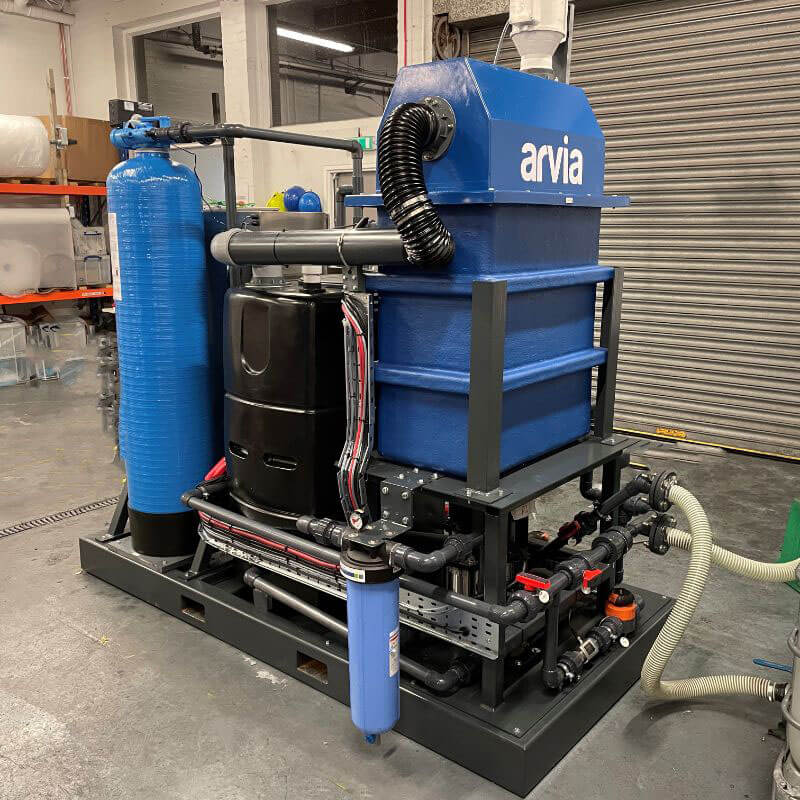
Arvia’s Nyex Ellenox™ system was deployed for this application. Nyex Ellenox™ is an electrochemical oxidation process that produces powerful hydroxyl radicals (·OH) that destroys the organics. The industrial water treatment process is effective for wastewater recycling as all the organic pollutants are removed to allow for efficient wastewater recycling to take place. This is cheaper and more environmentally friendly process and is a simple hands-off process compared with Fentons or offsite incineration.
The Nyex Ellenox™ system can be used to remove organics to allow for safe discharge of effluent or water reuse, if you have a zero liquid discharge target.
“Our experience with Arvia so far has been really great. I believe there is really interest to make this into a success and the communication on this project is very good and clear.”
Energy company, The Netherlands
Free industrial wastewater consultation
Tell us what organic compounds you need to remove from your water and our consultants will give their recommended approach which might involve:
Engineering assessment of your water profile
Treatability trial to scope the pilot
Optioneering to determine best solution
Results
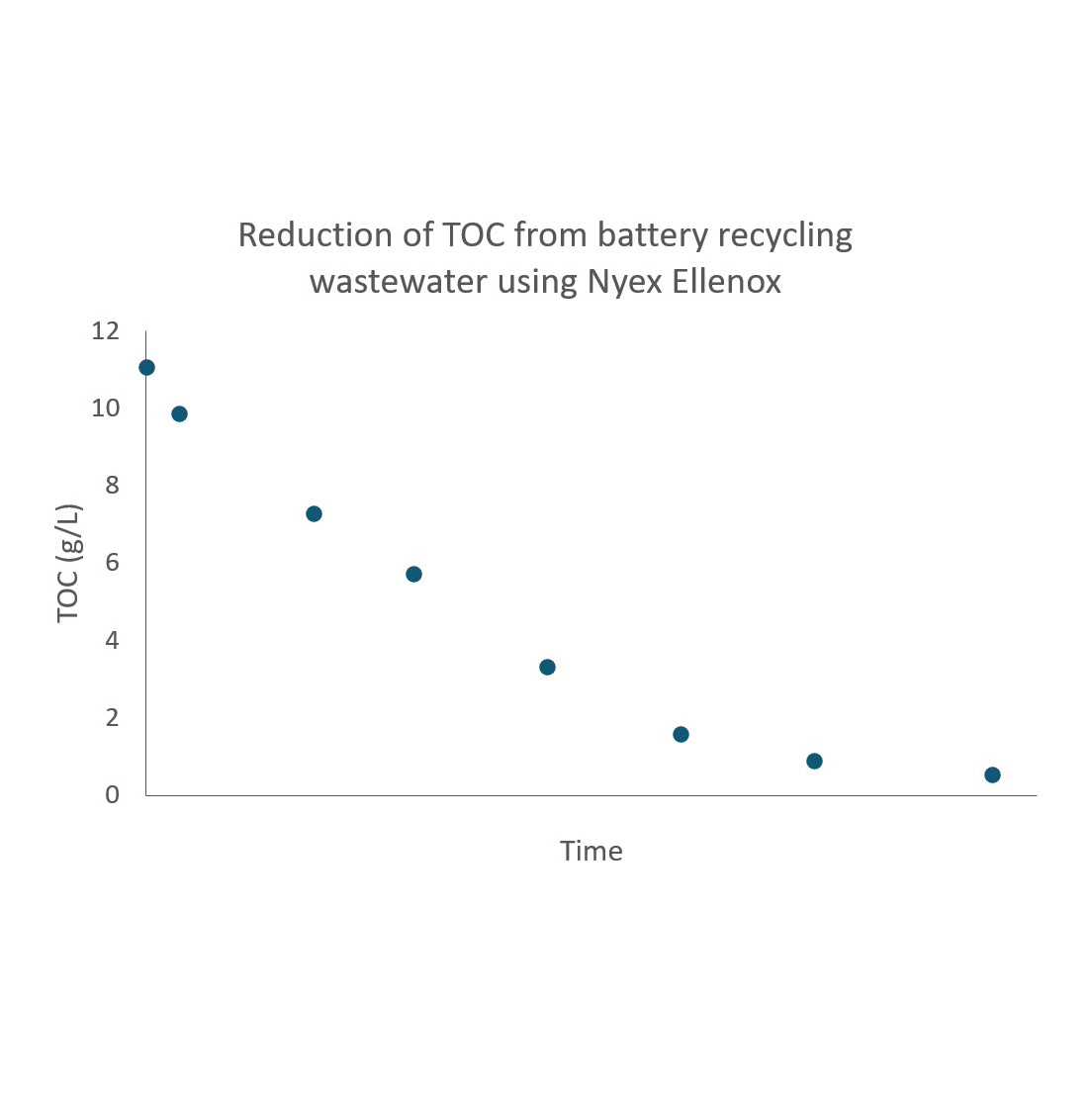
We worked very closely with the client to understand their process and decide the most suitable level of organics that the Ellenox system should remove. The number of times the water is recycled through the dunking, crushing, and washing loop was then decided. Arvia carried out an experimental program of work to remove organics from this battery wastewater. 95% TOC was successfully destroyed from an 11g/L TOC, exceeding the client’s target.
Ellenox can remove inlet TOC levels which then allows processes like reverse osmosis (RO) to be used downstream, to recover electrolytes such as lithium hexafluorophosphate (LiPF6).
Ellenox does not generate any toxic hydrogen fluoride (HF) gas unlike Fenton’s.