Triton X-100 otherwise known as octylphenol ethoxylate or 4-tert-OPnEO is a non-ionic surfactant that belongs to the substance group 4-(1,1,3,3-tetramethylbutyl) phenol, ethoxylated. This case study details our proven water treatment process which removes Triton X 100 to trace levels, avoiding the need for wastewater incineration.
Industry
Pharmaceuticals
Equipment Capacity/Flow Rate
Batch (4m3)
Compounds of Concern
Triton X-100
Influent Concentration
1000ppm
Treatment Targets
Below 10ppm
Unit Energy Consumption
168 kWh per batch
Industry
Pharmaceuticals
Equipment Capacity/Flow Rate
Batch (4m3)
Compounds of Concern
Triton X-100
Influent Concentration
1000ppm
Treatment Targets
Below 10ppm
Unit Energy Consumption
168 kWh per batch
Problem & Objective: How to dispose of Triton X 100
A well renown pharmaceutical manufacturing company came to Arvia with the goal of Triton X 100 removal from 1000 mg/l to 10 mg/l to comply with the current restrictions imposed on the chemical. The client was looking for an eco-friendly wastewater treatment approach to improve their carbon-footprint and meet their CSR policy.
Before approaching Arvia, the client disposed of Triton X 100 wastewater via incineration, which involves collecting the contaminated wastewater and trucking it off to a specialised facility to be incinerated. This process is not only extremely costly but the journey to transport the wastewater will increase your carbon footprint along with harmful toxins being emitted into the atmosphere causing long term environmental effects.
Jerome Budin
Wastewater consultant
Schedule a call with one of our wastewater treatment consultants at your convenience. Or you can send us an enquiry.
“Arvia have been interested, attentive and very knowledgeable in our project for treatment of API residues in waste. Their technology is innovative and has been proven to solve our waste issue.”
Pharmaceutical company, US
Our solution: How to remove Triton X 100 from water
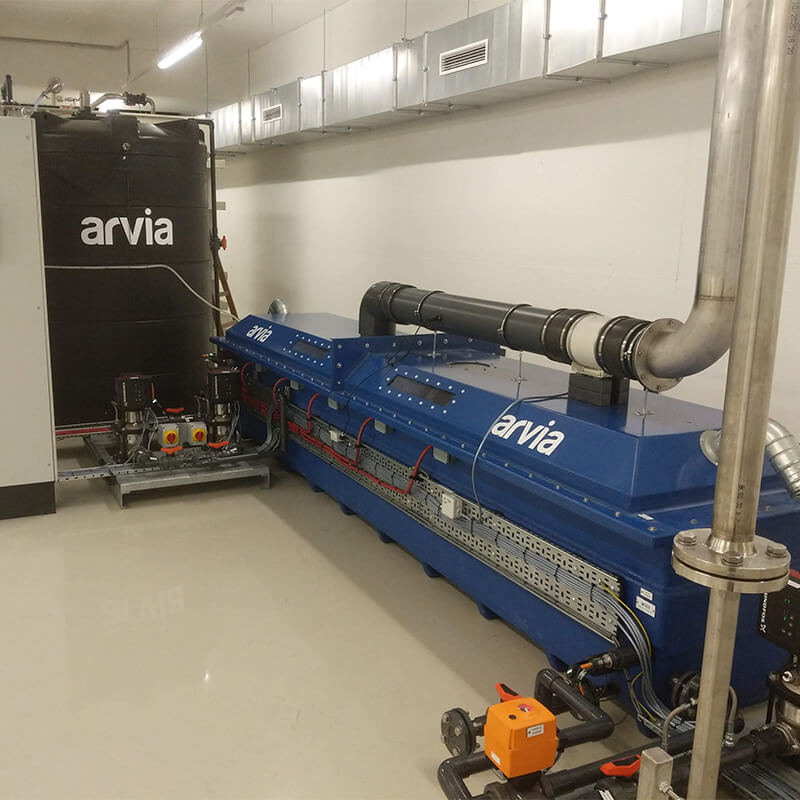
As an incineration alternative we proposed to the client our Nyex Ellenox wastewater treatment system which is an electrochemical oxidation process that produces powerful hydroxyl radicals (·OH) that removes the organic contaminant. During the treatment the ·OH radicals destroy the Triton X chemical which then fully mineralises the pollutant into gas which is then safely vented away.
This process will allow the client to save a significant amount on operating costs as well as being more eco-friendly with no chemical dosing or toxic sludge to deal with.
Free industrial wastewater consultation – Triton X 100 removal
Whether it is Triton X 100 removal or other organic compounds that you need to remove from your water, our consultants will give their recommended approach. This might involve:
Engineering assessment of your water profile
Treatability trial to scope the pilot
Optioneering to determine best solution
Results
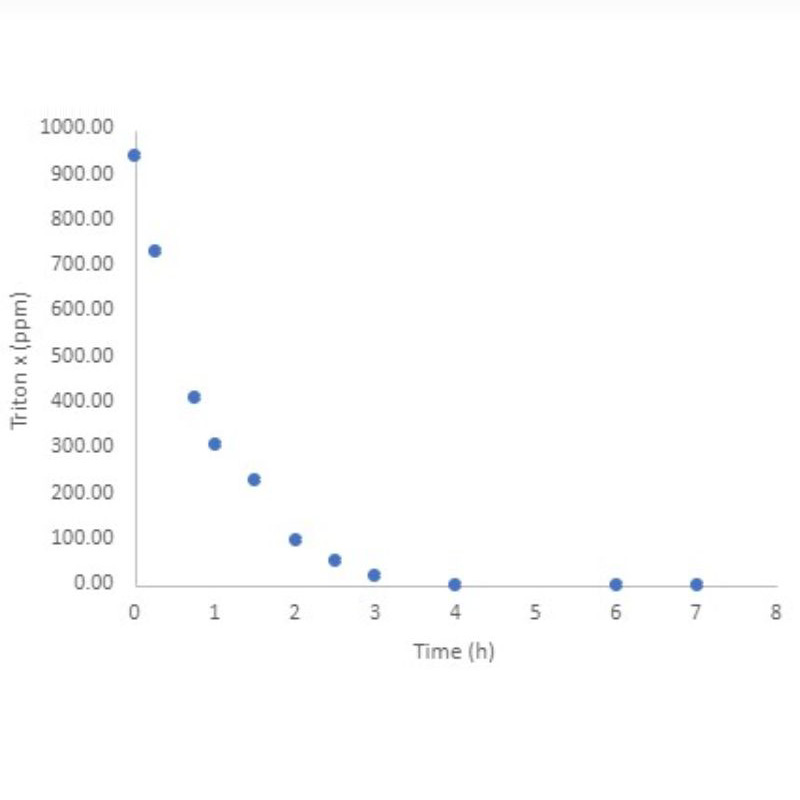
The original objective of our client was to reduce the Triton X 100 (4-tert-OPnEO) from 1000 mg/L to 10 mg/L from their industrial wastewater.
We worked closely with the client and with the process being a batch treatment method, we found that the Triton X 100 chemical responded very well to our Nyex Ellenox system.
The result was reducing the contaminant from 1000 mg/l to 0.2/mg/l which exceeded our client’s objective by achieving 99.98% Triton X 100 removal from their pharmaceutical wastewater.
With our ongoing projects, we have proven that electrochemical oxidation is the most effective solution to remove Triton X 100 otherwise known as octylphenol ethoxylate from pharmaceutical wastewater. Our Nyex Ellenox technology can give an eco-friendly wastewater treatment solution to entirely remove organic contaminants from the wastewater ready to be reused.
People who read this also liked these case studies
Removal from 15 mg/L was demonstrated and a reduction to 0.01 mg/L was reached in less than 6 minutes residence time using about 0.70 Euros worth of energy per m3.